
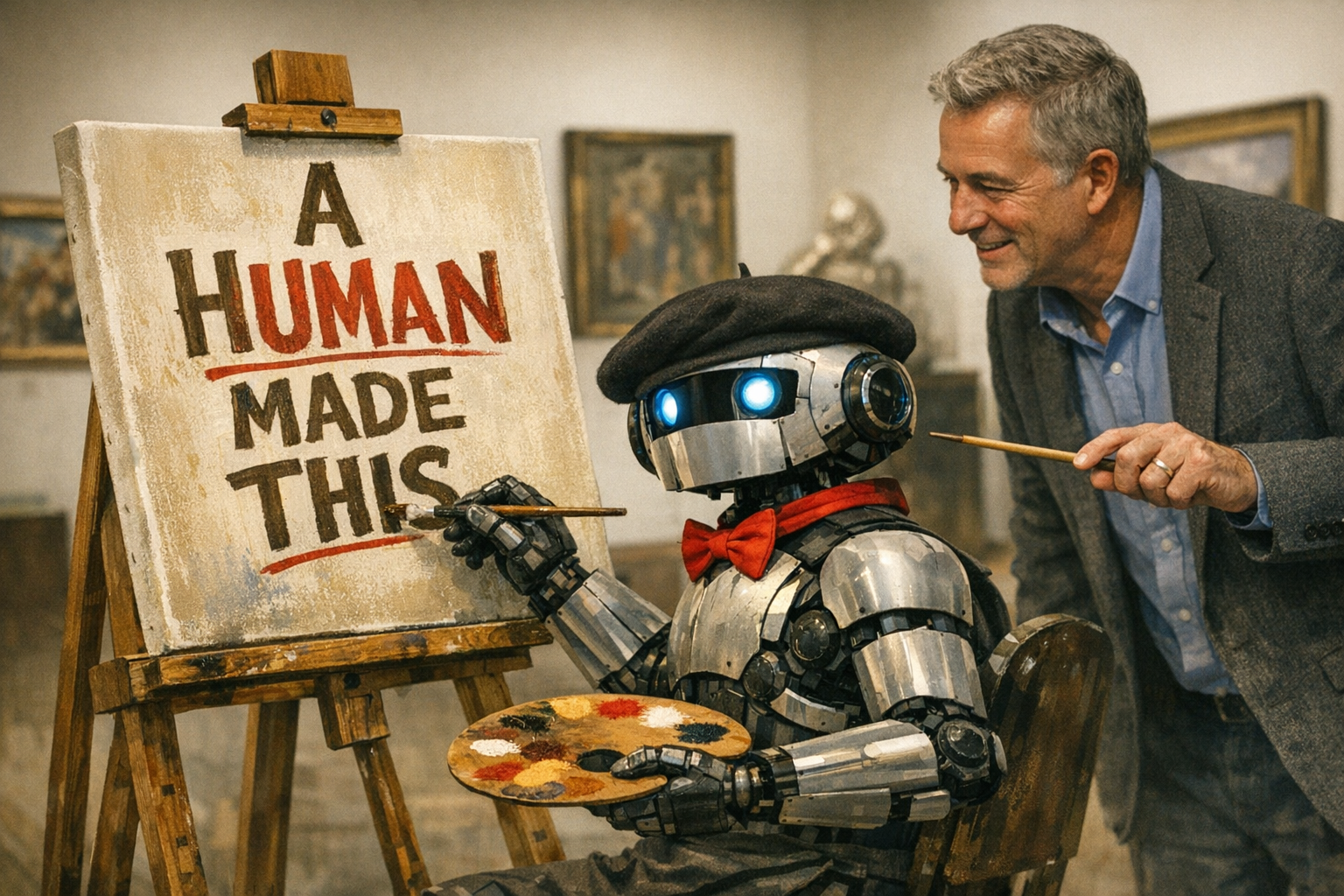
The U.S. Supreme Court refusal to hear Thaler v. Perlmutter doesn’t just leave an unanswered question — it cements a temporary reality: in the eyes of U.S. law, only humans can create copyrightable art. Everything else? It’s algorithmic noise with no ownership, no protection, and no legal standing.
And that vacuum — that refusal to define authorship in the AI era — is exactly where the next decade of IP warfare will unfold.
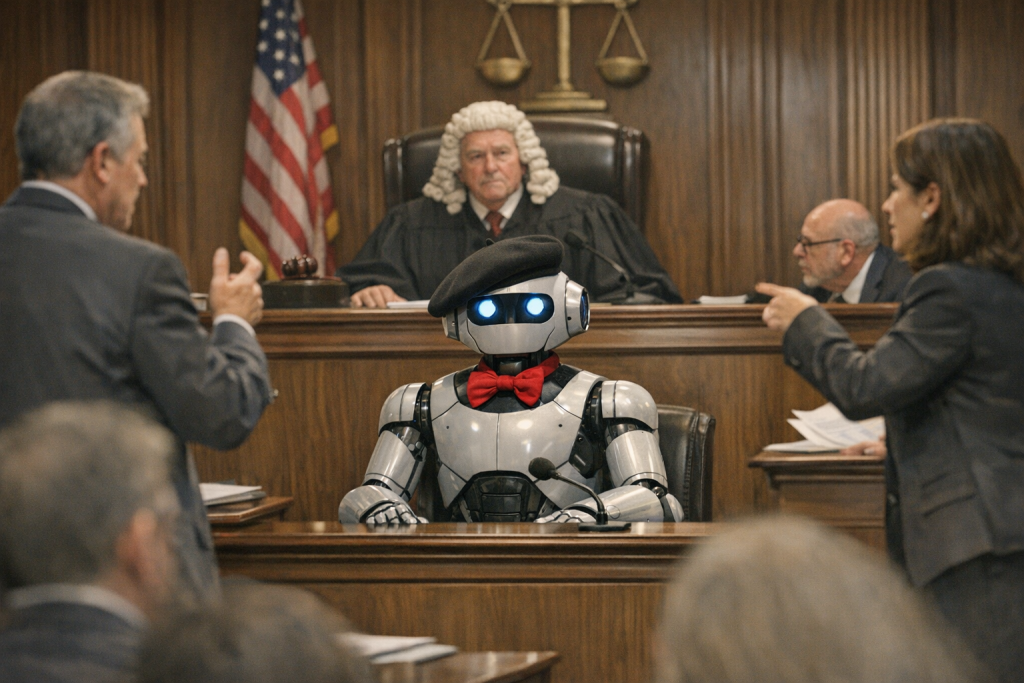
🧠 The Case That Could’ve Defined AI Authorship
But SCOTUS Let It Die on the Vine
- Stephen Thaler, a computer scientist, built an AI system called DABUS and in 2018 sought copyright for an artwork it generated, A Recent Entrance to Paradise.
- The Copyright Office rejected it, saying copyright requires a human author.
- A federal judge in 2023 called human authorship a “bedrock requirement” of copyright.
- The D.C. Circuit affirmed in 2025.
- And now, the Supreme Court declined to hear the appeal, letting all of that stand.
This wasn’t a surprise — but it was a statement.
🏛️ Trump’s DOJ Backed the Copyright Office
The administration argued that the Copyright Act was written for human creators, not machines, and that nothing in the statute suggests otherwise.
That position now effectively becomes the national default.
🔍 The Quiet Loophole the Courts Left Open
Here’s the part everyone should be paying attention to:
The appeals court noted that Thaler could have claimed authorship himself rather than listing the AI as the creator.
That single line is the crack in the wall — the legal escape hatch for AI‑assisted works:
- If a human guides, selects, edits, or shapes the output,
- And can demonstrate meaningful creative contribution,
- The work may still be copyrightable.
This is exactly how the creator of Invoke secured copyright for an AI‑assisted image in 2025.
In other words: Pure AI authorship is dead. Hybrid authorship is the new battleground.
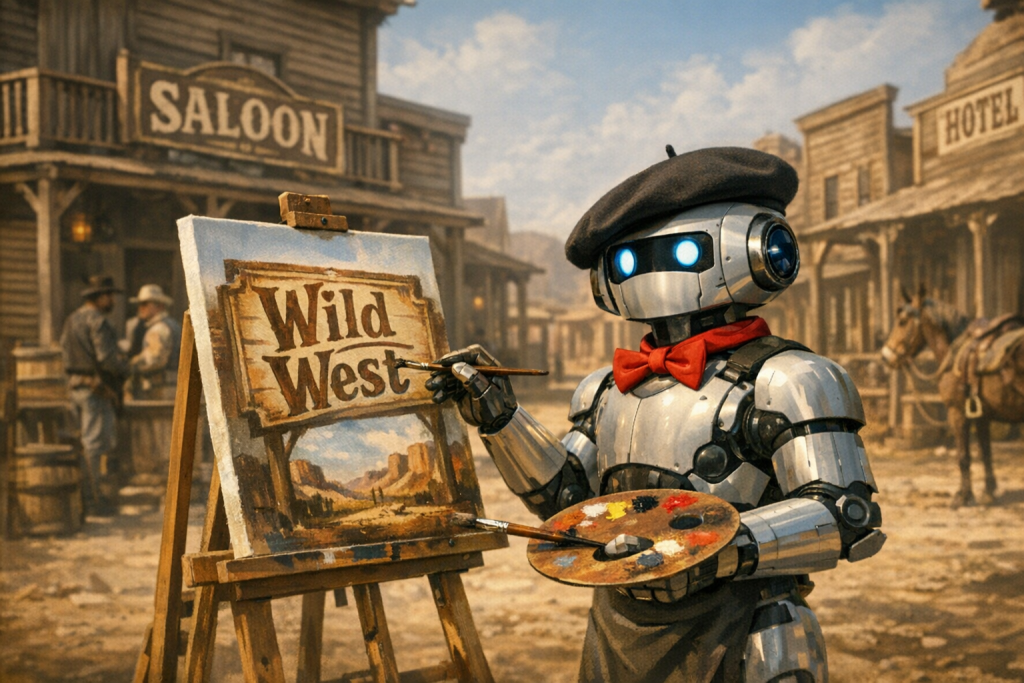
🎭 The AI Art Wild West Just Got Wilder
The Supreme Court’s silence doesn’t settle the issue — it prolongs the chaos.
- AI models are more powerful than ever.
- They can mimic real artists, real styles, real people.
- And the legal system still has no unified framework for ownership, attribution, or misuse.
Meanwhile, the Copyright Office is already dealing with:
- Comic books with AI‑generated panels that slipped through registration.
- Artists using Midjourney and fighting for partial copyright.
- AI systems generating images of real people, including celebrities and minors.
And that’s before we even get to the deepfake scandals, the Disney character knockoffs, or Grok’s recent controversies over generating indecent or IP‑violating content — all symptoms of a system where the tech is moving faster than the law.
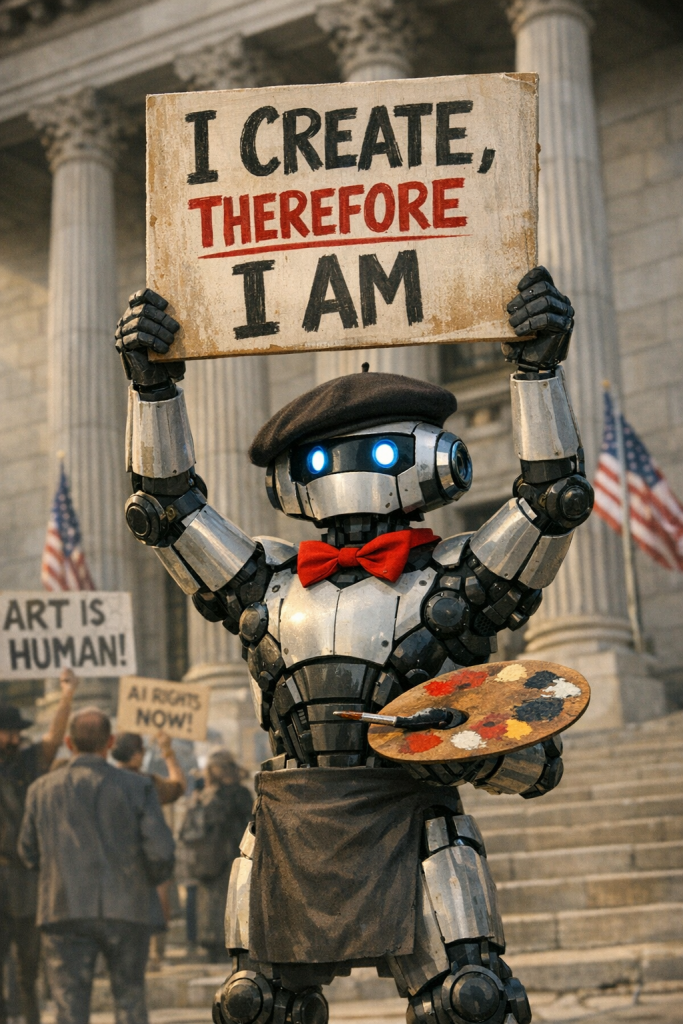
🧩 This Isn’t About One Artist — It’s About Who Controls Creativity
Thaler’s case was never really about one image. It was about who gets to be an author in the age of machines.
By refusing to hear the case, the Supreme Court effectively said:
“We’ll wait until the lower courts start disagreeing before we step in.”
That means the next few years will be a patchwork of rulings, loopholes, and contradictory standards — a perfect storm for:
- Big Tech
- Hollywood
- AI labs
- And anyone trying to protect their likeness, voice, or creative identity
to fight over the definition of authorship itself.
🥜 The Final Nut
This isn’t just a legal story — it’s a power story.
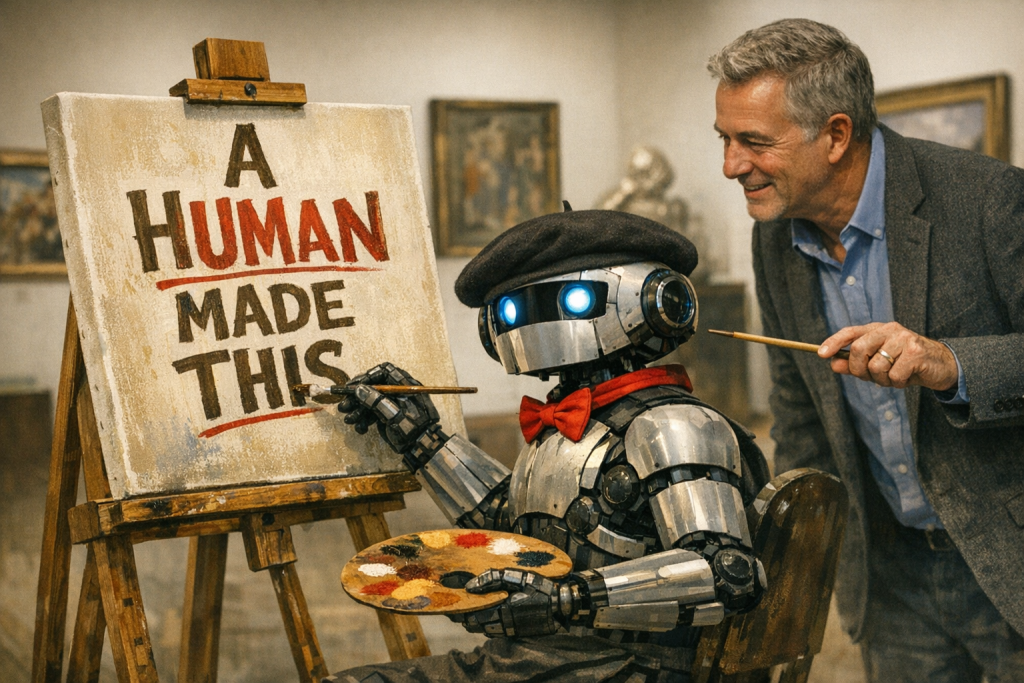
The courts are drawing a line in the sand: AI is a tool, not a creator. But they’re leaving the rest of the battlefield unguarded, and in that vacuum, the question becomes:
Who gets to claim ownership of machine‑generated creativity — the coder, the company, the user, or the machine itself?
Right now, the answer is: Whoever can convince a judge they were “human enough” in the process. That’s not a standard. That’s a coin toss.
If AI is “just a tool,” then the logic should be consistent. Every digital creator already relies on tools — Photoshop brushes, Blender rigs, Procreate filters, Unreal Engine shaders. None of those diminish human authorship. The creative act isn’t the pixel‑pushing; it’s the vision, the choices, the constraints, the prompting, the iteration.
AI doesn’t spontaneously wake up and design a logo or character for someone’s brand. A human builds the concept, engineers the prompt, refines the output, and decides what lives and what gets deleted. That’s authorship. The machine is the brush — not the painter.
So, the question isn’t whether AI “made” the art. The real question is whether a human directed the creative process. And if that’s the standard, then AI‑assisted work belongs in the same copyrightable universe as every other digital medium. The origin is still human. The tool just got faster.
And as AI systems become more autonomous, more generative, and more capable of producing art indistinguishable from human work, the stakes only get higher.
Any Questions or concerns, please comment below or Contact Us here.

🧷 Top Source References with URLs
Justia – Full DC Circuit Ruling in Thaler v. Perlmutter (2025) https://law.justia.com/cases/federal/appellate-courts/cadc/23-5233/23-5233-2025-03-18.html
Holland & Knight – Supreme Court Refuses to Hear AI Authorship Case https://www.hklaw.com/en/insights/publications/2026/03/the-final-word-supreme-court-refuses-to-hear-case-on-ai-authorship
CNET – Philosophical Milestone: Thaler’s AI Copyright Battle Ends https://www.cnet.com/tech/services-and-software/supreme-court-declines-to-hear-ai-copyright-case-thaler-dabus/
U.S. Copyright Office – Copyright and Artificial Intelligence Reports https://www.copyright.gov/ai/
Congress.gov – Legal Sidebar on Generative AI and Copyright Law https://crsreports.congress.gov/product/pdf/LSB/LSB10922
- Deeznuts.tech Developer Progress Update 8-17-2026
- The Truth Behind the U.S. Government’s Sudden Shift on Anthropic
- Google Gives in to Uncle Sam’s Demands
- China Breaks the Brain Barrier with Neuracle BCI Technology
- ⚖️ The Supreme Court Just Blinked — And Left AI Copyright Law in a Legal No‑Man’s‑Land

Leave a Reply