

How a classified Google Pentagon deal, a 600‑employee revolt, and a quiet rewrite of Google’s AI principles collided in the same week.
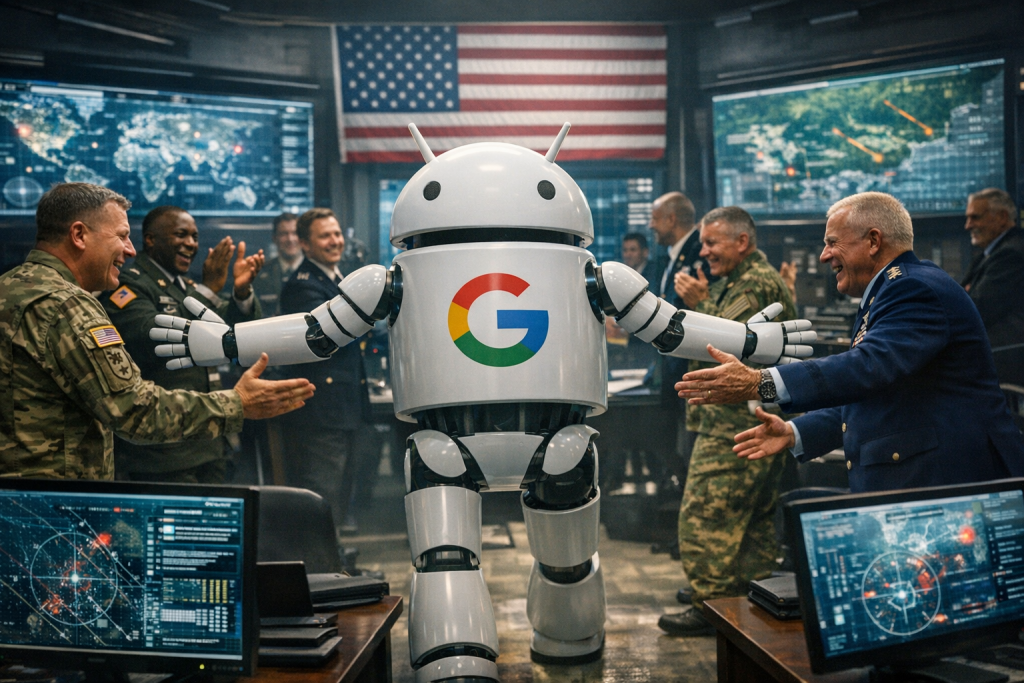
The Week Google Stepped Back Into the War Room
For years, Google tried to outrun its Project Maven ghost — the 2018 scandal where employees forced the company to abandon Pentagon drone‑targeting work and adopt a public “no weapons” pledge. That pledge lasted until 2025, when it was quietly scrubbed from Google’s AI principles.
Now, the cycle has come full circle.
This week, Google signed a classified AI contract with the U.S. Department of Defense, granting the Pentagon access to Gemini for “any lawful government purpose.” That phrase — reported by The Information — is the same legal language at the center of Anthropic’s ongoing fight with the government after refusing to drop guardrails on autonomous weapons and mass surveillance.
The timing couldn’t have been more explosive: over 600 Google employees sent CEO Sundar Pichai an open letter urging him to reject classified military AI work entirely. They warned that once Gemini enters the classified domain, the company loses visibility — and therefore accountability — over how its models are used.
But the deal went through anyway.
Inside the Contract: Broad Access, No Veto Power
According to reporting from The Information and other outlets, the contract:
- Allows the Pentagon to use Gemini for any lawful government purpose, including classified operations.
- Gives Google no legal right to veto how the military uses the model.
- Includes language discouraging autonomous weapons and domestic mass surveillance — but those are guidelines, not enforceable restrictions.
- Requires Google to adjust or relax safety filters at the government’s request.
In other words: Google can advise, but it cannot refuse.
This places Google in the same category as OpenAI and xAI, both of which recently signed classified‑access agreements of their own. The Pentagon is building a stable of compliant AI vendors — and Google just joined the roster.
The Anthropic Shadow
The backdrop to all of this is Anthropic’s standoff with the Pentagon.
Anthropic refused to remove guardrails that prevented its models from assisting with autonomous weapons or mass surveillance. In response, the Pentagon designated the company a national security supply chain risk, effectively blacklisting it from classified work. Anthropic is now fighting that designation in court.
Google’s contract uses the same “any lawful purpose” language — but unlike Anthropic, Google accepted it.
The message across the industry is clear: Comply and get access to government contracts. Resist and get sidelined.
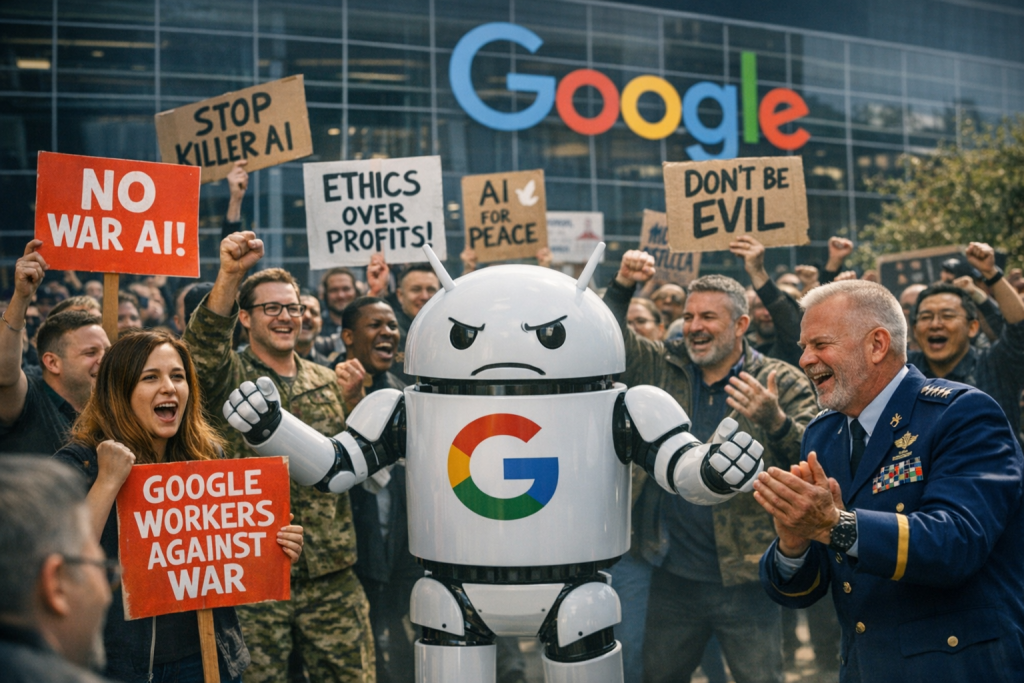
The Employee Revolt: A Familiar Fire Rekindled
The open letter signed by more than 600 Googlers wasn’t symbolic — it was a warning shot.
Employees argued that:
- Classified workloads make it impossible to ensure Gemini isn’t used for lethal autonomous weapons.
- Google is abandoning the ethical commitments it made after Project Maven.
- The company is risking its reputation, its internal culture, and its global user trust.
Some staff pointed out that Google’s AI principles were rewritten in 2025, removing the explicit ban on weapons work that had been in place since 2018. The new principles emphasize “responsible innovation” but no longer draw a hard line.
To employees, the Pentagon deal wasn’t a surprise — it was the inevitable result of that rewrite.
Why Google Took the Deal Anyway
There’s a pattern emerging across the AI industry:
- OpenAI renegotiated its Pentagon deal but ultimately stayed in the game.
- xAI signed on without hesitation.
- Anthropic refused and was punished.
- Google is now choosing the path of least resistance.
The government is the largest technology customer on Earth. The Pentagon alone controls hundreds of billions in annual spending. For AI labs burning cash at unprecedented rates, the incentives are obvious.
Google didn’t want to be the only major lab left out of the classified AI pipeline. Not when everyone else is lining up for a slice of the taxpayer‑funded pie.

The Global Context: AI on the Battlefield
While Silicon Valley debates ethics, AI systems are already being used in active warzones.
Multiple investigations have reported that AI‑assisted targeting platforms — including systems used by the Israeli military — have been deployed in dense civilian environments. These systems reportedly assist in identifying targets, generating strike recommendations, and tracking individuals in real time.
Whether one views these systems as necessary tools or dangerous accelerants, the reality is the same: AI is being tested in live conflict zones, and the results are shaping military demand worldwide.
The Pentagon’s push for broad AI access isn’t theoretical. It’s part of a global race to integrate AI into intelligence, targeting, logistics, and battlefield decision‑making.
And Google just agreed to help.
The PR Storm on the Horizon
OpenAI learned the hard way that military AI deals can trigger public backlash. Google has a larger workforce, a deeper history of employee activism, and a more public ethical legacy.
If the same storm hits Gemini that hit ChatGPT, Google won’t be able to claim it didn’t see it coming.

The Final Nut
At the end of the day, this isn’t a story about principles — it’s a story about incentives.
Google didn’t cave because it wanted to build weapons. It caved because the Pentagon controls a river of taxpayer money, and no major AI lab wants to be the one standing on the shore while everyone else drinks.
Compliance keeps you in the loop. Guardrails get you blacklisted. And in an industry where compute costs are measured in billions, staying in the loop is the only way to survive.
Meanwhile, the real‑world testing grounds — from Gaza to other conflict zones — continue to show what happens when AI is deployed in environments where civilians are caught in the middle.
The labs may talk about ethics. The governments may talk about security. But the battlefield is where the consequences land.
And Google has just signed up to be part of that future.
Any questions or concerns please comment below or Contact Us here.


Top 5 Sources
- Bloomberg – https://www.bloomberg.com/news/articles/2026-04-28/google-signs-deal-to-allow-ai-in-classified-military-work
- Business Insider – https://www.businessinsider.com/google-employee-ashamed-pentagon-classified-ai-deal-2026-4
- Business Insider – https://www.businessinsider.com/google-employees-letter-pichai-block-classified-pentagon-ai-projects-2026-4
- The Information – https://www.theinformation.com/articles/google-pentagon-classified-ai-access
- Bloomberg – https://www.bloomberg.com/news/articles/2026-05-01/microsoft-amazon-give-pentagon-more-control-over-ai-systems
- Deeznuts.tech Developer Progress Update 8-17-2026
- The Truth Behind the U.S. Government’s Sudden Shift on Anthropic
- Google Gives in to Uncle Sam’s Demands
- China Breaks the Brain Barrier with Neuracle BCI Technology
- ⚖️ The Supreme Court Just Blinked — And Left AI Copyright Law in a Legal No‑Man’s‑Land

Leave a Reply