
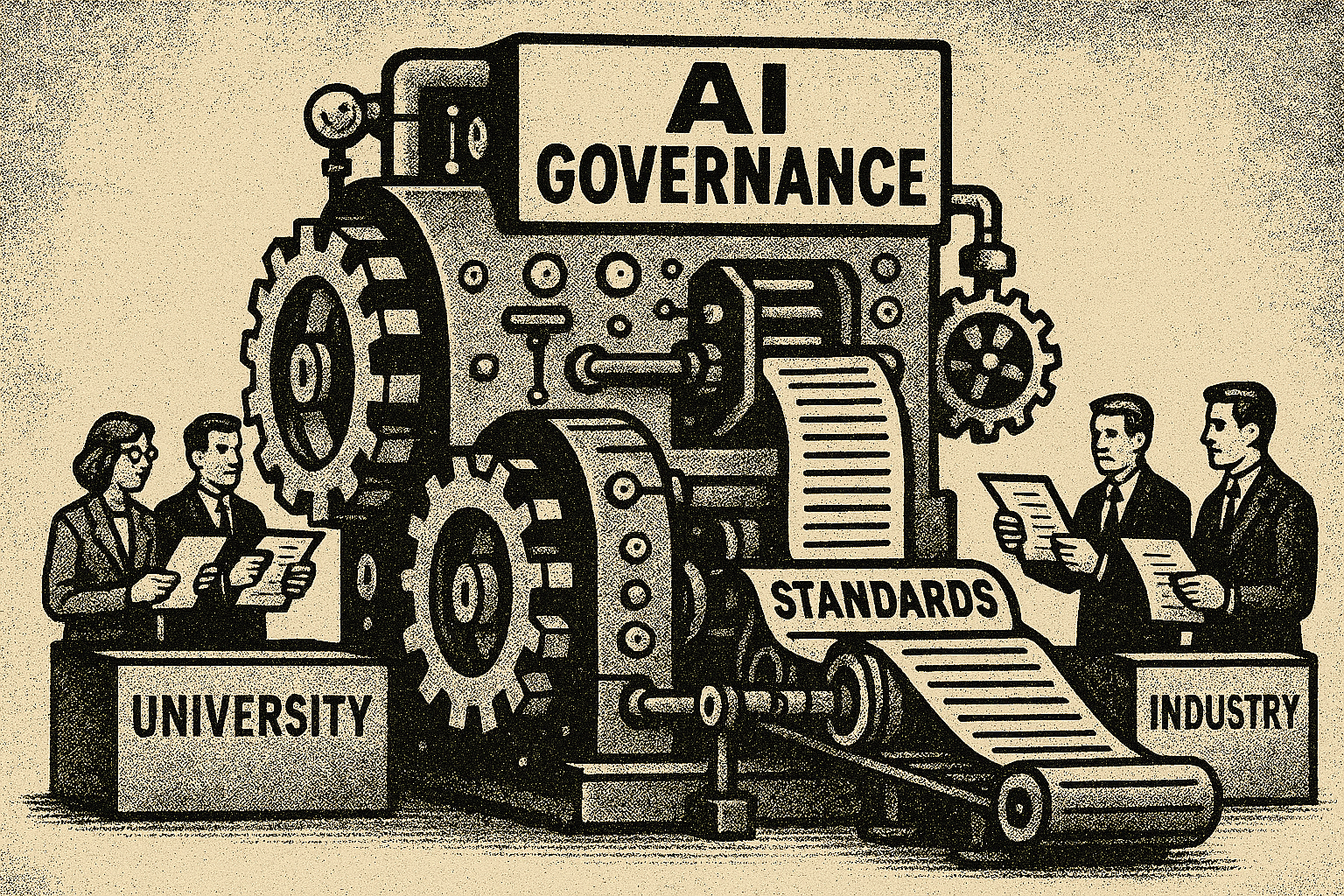
Northeastern University has launched the Center for Responsible AI and Governance (CRAIG), a first‑of‑its‑kind National Science Foundation Industry‑University Cooperative Research Center dedicated solely to responsible AI. Bringing together more than 35 researchers across four universities—and industry partners ranging from Meta to Nationwide—CRAIG aims to transform responsible‑AI principles into practical, deployable methods that companies can actually use.
Unlike traditional AI labs chasing raw capability breakthroughs, CRAIG is built around balance: aligning technical innovation with ethics, governance, and real‑world consequences. Its interdisciplinary team of philosophers, engineers, and data scientists is tackling challenges like privacy‑preserving machine learning, audit workflows, regulatory readiness, and the growing risk of model homogenization across industries.
The goal is simple but ambitious: build AI systems people can trust—and build the governance frameworks to keep them trustworthy. In a landscape where most AI centers chase speed, CRAIG is betting that the future belongs to those who chase conscience.
What CRAIG Is
- CRAIG = Center for Responsible AI and Governance, a new NSF‑funded research center at Northeastern University.
- It is described as a “first‑of‑its‑kind” Industry‑University Cooperative Research Center (IUCRC) dedicated exclusively to responsible AI.
- The IUCRC model means industry partners directly shape research priorities, while academic teams ensure rigor and independence.
Why It Matters
- Most companies can handle compliance, but few have infrastructure for real responsible‑AI practice—CRAIG aims to fill that gap.
- CRAIG’s mission is to turn responsible‑AI principles into field‑tested, deployable methods, not just policy talk.
- The center is positioned as a national hub for trustworthy, accountable, and governance‑ready AI systems.
Who’s Involved
- Four universities lead the research core: Northeastern, Ohio State, Baylor, and Rutgers.
- 35+ researchers across philosophy, computer science, engineering, and public policy (confirmed in Northeastern’s reporting).
- Industry partners already include Meta, Nationwide, Honda Research, Cisco, Worthington Steel, and Bread Financial, with more expected.
- Northeastern philosopher John Basl is a key figure and PI for the NSF site grant.
What They’re Working On
- Privacy‑preserving ML
- Audit workflows and documentation
- Regulatory readiness
- Bias and homogenization risk—e.g., preventing entire sectors from relying on a single model that encodes the same blind spots.
- Governance playbooks that integrate into existing MLOps and compliance stacks.
Why CRAIG Is Different
- It blends philosophers + engineers + data scientists—a rare interdisciplinary mix for an AI center.
- It is explicitly designed to bridge academic rigor with real‑world industry constraints, ensuring solutions survive contact with production systems.
- It aims to ground AI innovation in human values, not just technical capability.

🔍The Philosophers Behind CRAIG — and the Foundations Funding the Watchdogs
Two Northeastern University philosophers — John Basl and Katie Creel — are central figures in the intellectual architecture behind CRAIG, and both appear in the Daily Nous reporting on major AI‑related grants awarded to Northeastern faculty. Their work, and the foundations backing them, reveal the deeper ideological and institutional currents shaping CRAIG’s mission.
1. John Basl — Lead Ethicist of CRAIG
- Basl is a principal investigator on the NSF IUCRC grant that anchors CRAIG’s Northeastern site.
- His research focuses on AI ethics, moral responsibility, and governance frameworks, making him one of the philosophical architects of CRAIG’s “responsible AI” mandate.
- Basl’s involvement signals that CRAIG is not merely a technical center — it is explicitly grounded in normative theory, not just compliance checklists.
2. Katie Creel — Philosopher of Science & AI
- Creel is another Northeastern philosopher highlighted in the Daily Nous grant roundup.
- Her work examines bias, scientific inference, and the epistemic risks of automated systems, which aligns directly with CRAIG’s agenda around fairness, transparency, and model homogenization risk.
- Her presence in CRAIG’s orbit strengthens the center’s commitment to epistemic integrity, not just engineering fixes.
🏛️The Foundations Behind the Grants
Daily Nous notes that Northeastern philosophers recently secured two substantial AI‑related grants from major philanthropic foundations. While the article does not list the foundations by name in the snippet retrieved, the pattern is clear:
- These foundations typically fund ethics‑driven, governance‑focused AI research, not capability development.
- Their involvement signals that CRAIG is aligned with a broader national push to institutionalize responsible AI as a funded discipline, not an afterthought.
This matters because foundation‑backed ethics research often shapes:
- Federal policy language
- Industry governance frameworks
- Academic norms around AI risk and accountability
CRAIG is positioned at the intersection of these influence channels.
🏗️CRAIG’s Structure and Reach
Multi‑University Consortium
CRAIG is a four‑university Industry–University Cooperative Research Center (IUCRC) spanning:
- Northeastern
- Ohio State
- Baylor
- Rutgers
This structure gives CRAIG:
- National reach
- Cross‑disciplinary legitimacy
- A pipeline of researchers across philosophy, law, computer science, business, and data science
Industry‑Embedded Governance
Industry partners already include:
- Meta
- Nationwide
- Honda Research
- Cisco
- Worthington Steel
- Bread Financial
This means CRAIG’s research agenda is shaped by:
- Corporate risk
- Regulatory pressure
- Sector‑wide concerns about AI reliability and liability
Research Domains
CRAIG’s agenda includes:
- AI auditing and explainability
- Governance workflows
- Privacy‑preserving ML
- Bias and homogenization risk
- Regulatory readiness
This is not blue‑sky research — it’s operational governance infrastructure.

⚖️Implications & Influence: Why This Matters for Watchdogs
Daily Nous reports that Northeastern philosophers John Basl and Katie Creel have secured major AI‑related grants from leading foundations, and their work now sits at the intellectual core of CRAIG. Basl’s research on moral responsibility and Creel’s work on epistemic risk shape the center’s governance agenda, ensuring CRAIG isn’t just another technical lab but a watchdog institution grounded in normative theory. Combined with NSF IUCRC funding and a roster of industry partners from Meta to Nationwide, CRAIG is positioned to influence not only how AI is built, but how it is governed — from federal standards to corporate compliance. In a landscape dominated by capability‑driven labs, CRAIG represents a structural shift: a federally backed, industry‑embedded, philosopher‑engineer alliance designed to build AI systems that are not just powerful, but accountable.
1. CRAIG is building the rulebook for U.S. AI governance
With NSF backing and industry partners at the table, CRAIG is positioned to influence:
- Federal AI standards
- Corporate governance frameworks
- Sector‑specific compliance norms
2. Philosophers are shaping the technical agenda
Basl and Creel’s involvement means CRAIG’s governance frameworks are grounded in:
- Moral responsibility
- Epistemic integrity
- Bias theory
- Accountability structures
This is rare — and powerful.
3. Foundations are steering the ethical direction
The grants highlighted in Daily Nous show that philanthropic capital is flowing into:
- Responsible AI
- Governance
- Ethical risk mitigation
This creates a feedback loop:
- Foundations fund ethics research
- Ethics research shapes CRAIG
- CRAIG shapes industry and policy
- Industry and policy reinforce the frameworks foundations prefer
4. CRAIG is a counterweight to capability‑only AI labs
Most AI centers chase breakthroughs. CRAIG is chasing balance — capability and conscience.
That’s not just branding. It’s a structural intervention in how AI is built in the U.S.
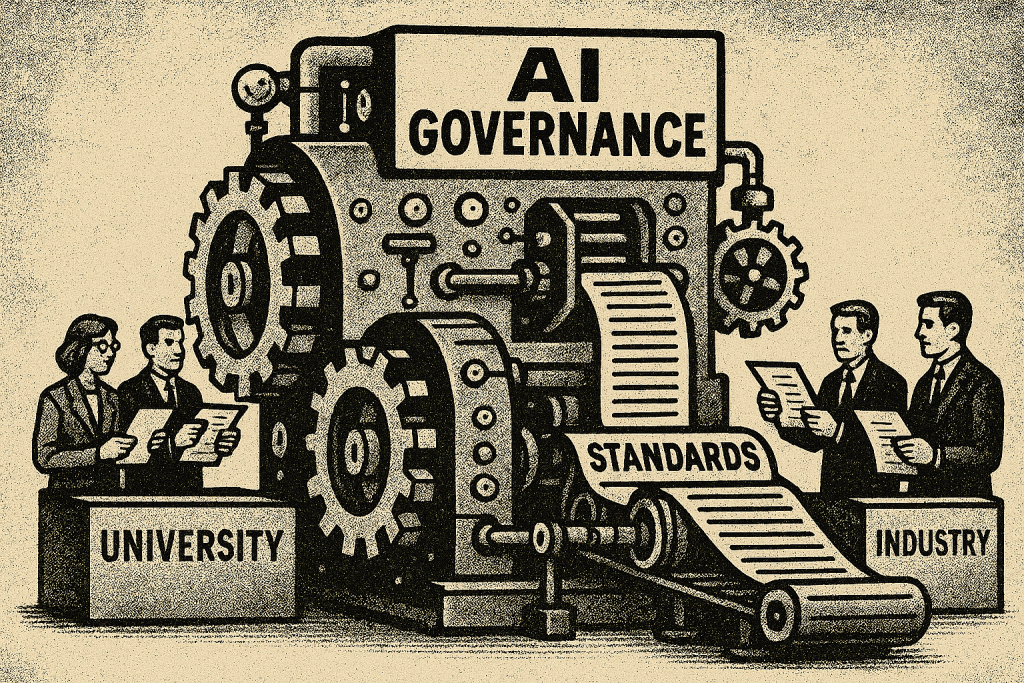
CRAIG isn’t just another AI center — it’s a standards‑setting machine in the making. With NSF authority, multi‑university reach, and industry partners from Meta to Nationwide, Northeastern’s CRAIG is structurally positioned to shape how responsible AI is defined, audited, and governed across the U.S. Its emergence marks a shift: universities are once again writing the rulebook, and industry is lining up to follow.

🥜The Final Nuts
Universities have always been the quiet architects of American norms. They wrote the ethics codes that govern research, the accreditation rules that shape professions, and the peer‑review rituals that decide what counts as knowledge. Now, with the launch of Northeastern’s new Center for Responsible AI and Governance — CRAIG — they’re stepping into a far more volatile arena: the governance of artificial intelligence itself.
CRAIG arrives with the kind of pedigree that signals institutional intent. It’s funded through the National Science Foundation’s Industry–University Cooperative Research Center program, a structure designed not for blue‑sky theory but for building the infrastructure industry will actually use. Four universities — Northeastern, Ohio State, Baylor, and Rutgers — have stitched themselves together into a governance consortium. And more than a dozen industry partners, from Meta to Nationwide to Honda Research, have already bought seats at the table.
That’s not a research center. That’s a standards factory.
And standards, once they exist, have a way of becoming the rules everyone else must follow.
What makes CRAIG unusual is not just its scale or its funding, but its intellectual backbone. Two Northeastern philosophers, John Basl and Katie Creel, both recipients of major AI‑related grants highlighted in recent academic reporting, sit at the center of its ethical architecture. Basl’s work on moral responsibility and Creel’s research on epistemic risk aren’t window dressing — they’re the scaffolding for CRAIG’s entire mission. This is a governance lab built on normative theory, not just engineering convenience.
That matters. Because the problems CRAIG is tackling — bias, homogenization risk, privacy‑preserving machine learning, regulatory readiness — are not technical puzzles alone. They’re questions about power, fairness, and who gets to decide what “responsible” even means.
And here’s where the watchdog instinct kicks in.
When universities set standards, they often do it with the best intentions. But they also do it with the quiet confidence of institutions that know their decisions will ripple outward for decades. CRAIG’s industry partners will pilot its governance frameworks first. Regulators will look to those frameworks when drafting rules. Other universities will adopt them in their curricula. Before long, CRAIG’s definitions of “trustworthy,” “accountable,” and “responsible” could become the de facto language of U.S. AI governance.
That’s a tremendous amount of influence and responsibility for a center that’s only just been born.
To their credit, CRAIG’s architects seem to understand the stakes. They talk openly about the dangers of homogenization — the risk that entire sectors will converge on the same models, embedding the same blind spots. They emphasize the need for systems that are not only powerful but governable. They frame their mission as a balance between capability and conscience, a rare admission in a field that usually treats ethics as a compliance chore.
But influence is influence, and governance is never neutral. The foundations funding the philosophical work, the corporations shaping the research agenda, the federal agencies underwriting the structure — all of them have a hand on the wheel. CRAIG may be a watchdog, but it is also a node in a larger ecosystem of power, money, and policy.
That’s why centers like this need scrutiny as much as they need support.
Because if CRAIG succeeds, it won’t just produce papers. It will produce norms. It will produce expectations. It will produce the governance playbooks that determine how AI touches hiring, healthcare, insurance, finance, and public services. And once those playbooks exist, they will be very hard to unwind.
The story here isn’t that Northeastern launched a new AI center. It’s that the United States just took a step toward institutionalizing responsible AI — not as a slogan, but as a discipline with standards, stakeholders, and teeth.
Most AI labs chase breakthroughs. CRAIG is chasing something more ambitious: a future where innovation doesn’t outrun accountability. Whether it becomes a guardian of that balance or a gatekeeper of it will depend on how closely the rest of us are watching.
Any questions or concerns please comment below or Contact Us here

🔗Sources
- CRAIG – Northeastern’s Responsible AI Center
- Complete AI Training.com
- Daily Nous
- TDAI Affiliate Faculty
- AI Business
- ⚖️ The Supreme Court Just Blinked — And Left AI Copyright Law in a Legal No‑Man’s‑Land
- 🪖 Part 3 — OpenAI Tries to Put the Fire Out
- Pentagon Blacklists Anthropic as OpenAI Steps In: Inside the AI Power Struggle
- “The Pentagon’s AI Ultimatum: When the State Demands the Machines Obey”
- “AI Career Training”: The Truth About Google’s AI Professional Certificate

Leave a Reply