
🎙️Introduction
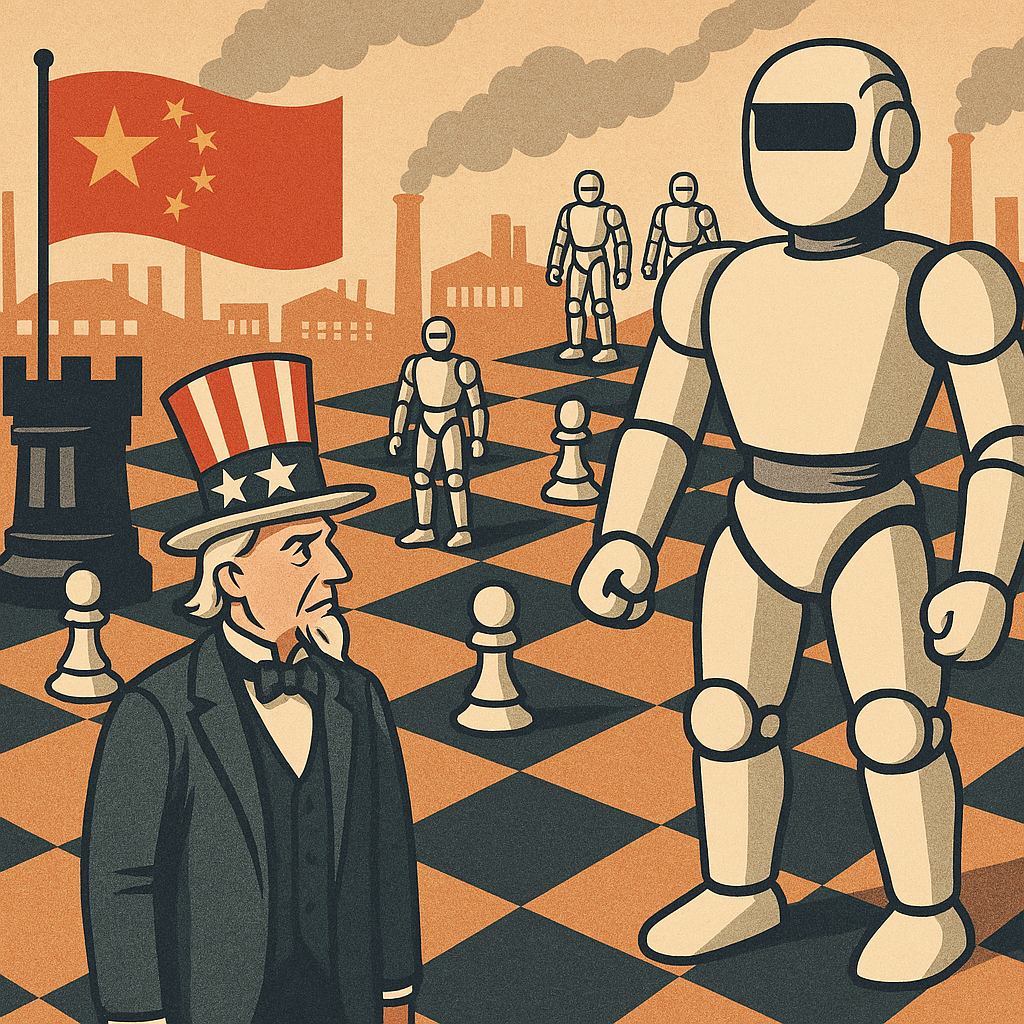
Five months after unveiling a national plan to accelerate artificial intelligence, according to Politico the Trump administration is now turning its attention to robotics. This pivot signals a broader embrace of industrial policy aimed at countering Beijing’s dominance in critical technologies. But it also raises pressing questions: will robots revive American manufacturing, or replace the very workers the administration promises to protect?
🚀 The Policy Shift
- Commerce Secretary Howard Lutnick has been meeting with robotics CEOs and is reportedly “all in” on accelerating the industry’s development.
- An executive order on robotics is under consideration for 2026, while the Department of Transportation is preparing a robotics working group.
- Capitol Hill is stirring too: a Republican amendment proposed a national robotics commission, though it didn’t make it into the latest defense bill.
This robotics push is both bold and fraught. On one hand, it positions the U.S. to compete in a sector where China has already established dominance. On the other, it risks deepening the tension between technological progress and workforce revival. The administration’s challenge will be to craft a robotics strategy that doesn’t just chase global rivals, but also ensures American workers are part of the story—not casualties of it.
🌍 The Global Race
- China already leads with 1.8 million industrial robots in factories by 2023, quadruple the U.S. count.
- Nations like Japan, Germany, Singapore, and Australia have national robotics strategies in place.
- U.S. robotics funding is expected to hit $2.3 billion in 2025, double last year’s total.
- Goldman Sachs projects the global humanoid market could reach $38 billion by 2035.
Translation: America is late to the party, and the keg is already half empty.
🏭 Industry Voices
Robotics firms are lobbying hard, branding robots as the “physical embodiment of AI.” Their wish list: tax breaks, federal funding, stronger supply chains, and trade policies to counter Chinese subsidies. Apptronik’s Apollo humanoid is already clocking in at auto factories, while Boston Dynamics warns that robotics is now a matter of national security.
- Robotics firms argue robots are the physical embodiment of AI, and any AI strategy must include robotics.
- They’re lobbying for:
- Tax incentives
- Federal funding
- Stronger supply chains
- Trade policies to counter Chinese subsidies.
- Apptronik’s Apollo robot, backed by Google, is already operating inside auto factories.
- Boston Dynamics stresses robotics’ importance for manufacturing, defense, and public safety.
⚖️ The Workforce Dilemma
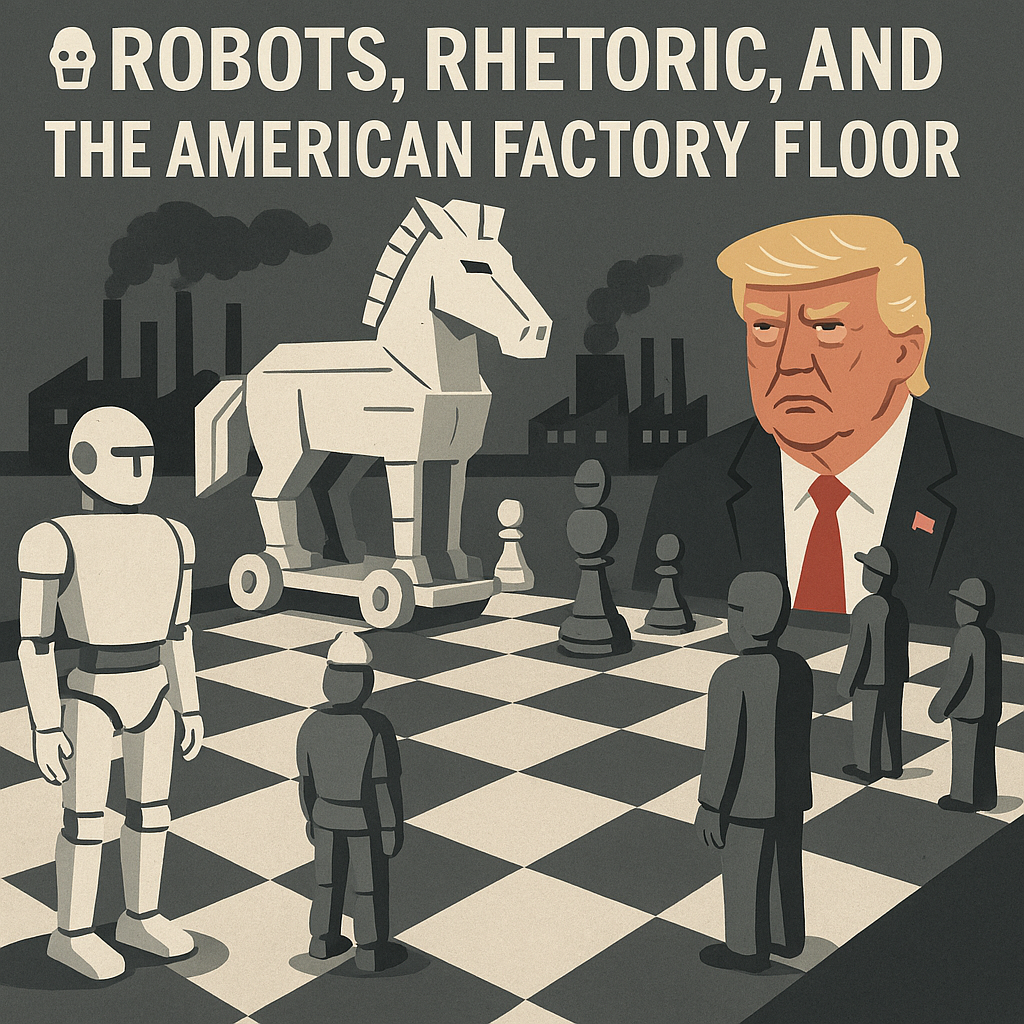
Here’s the rub: Trump’s promise to revive U.S. manufacturing jobs collides head-on with automation. Research shows routine workers lose opportunities and earnings when firms automate. Advocates counter that robots can augment human capability, creating new jobs in building, deploying, and maintaining machines. Industry leaders spin it as “man and machine” marching together into the future.
- Skeptics warn automation could undermine Trump’s promise to revive U.S. manufacturing jobs.
- Research shows routine workers often face reduced opportunities and earnings when firms automate.
- Advocates counter that robotics can augment human capability, creating new roles in building, deploying, and maintaining robots.
- Industry leaders frame the future as “man and machine” working together, not in competition.
Robotics is no longer science fiction—it’s industrial reality. The Trump administration’s next move will determine whether America’s factories are staffed by people empowered by machines, or machines replacing people. The stakes are high: national security, economic competitiveness, and the future of work itself.
🥜 The Final Nut
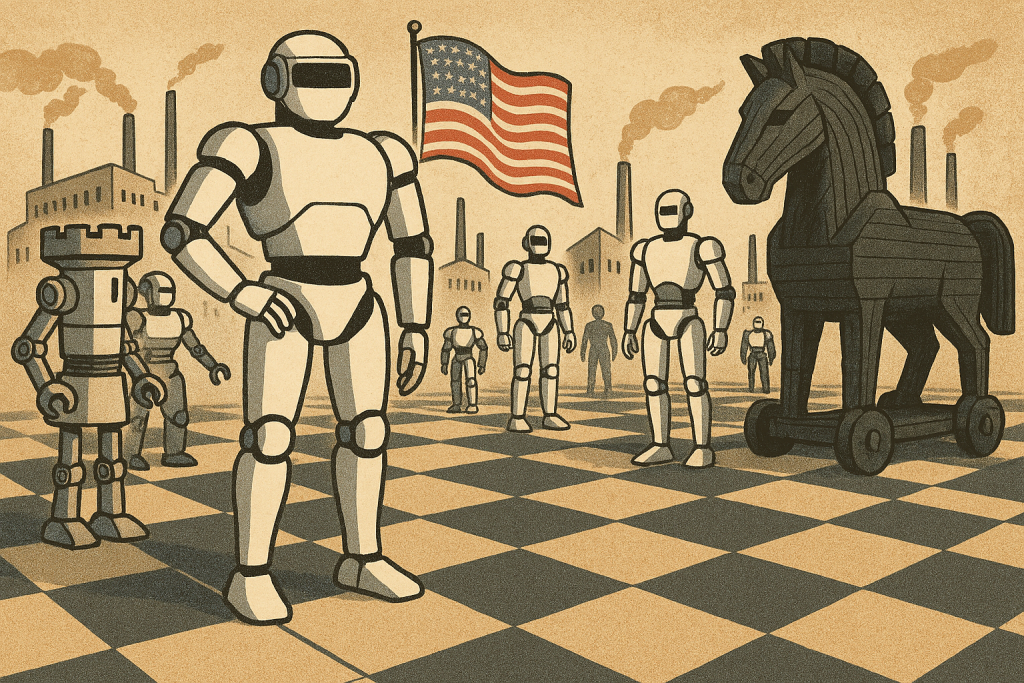
America is racing to catch up in robotics, but the finish line isn’t just about beating Beijing—it’s about who’s left standing at the factory gate. If this strategy reshapes U.S. manufacturing into warehouses of humanoids, the “revival” could be a hollow victory. The nut to crack is simple: will robots be America’s competitive edge, or the silent pink slip slipped under the door?
Any questions or concerns please comment below or Contact Us here.

Politico’s article cites a mix of anonymous sources and official statements, but the bulk of the reporting leans on insider accounts:
🗣️ Official Statement
- A Department of Commerce spokesperson is quoted saying:“We are committed to robotics and advanced manufacturing because they are central to bringing critical production back to the United States.” This is the only direct, attributed statement from the administration in the piece.
🕵️ Anonymous Sources
- Politico relies heavily on three unnamed individuals familiar with internal discussions, who say Commerce Secretary Howard Lutnick is “all in” on accelerating robotics.
- Two sources mention that an executive order on robotics is being considered for next year.
- Another source says the Department of Transportation is preparing a robotics working group announcement.
🧩 Legislative Signals
- A Republican amendment to the National Defense Authorization Act proposed a national robotics commission, though it wasn’t included in the final bill.
- Industry leaders like Apptronik’s CEO and Boston Dynamics’ VP are quoted directly, pushing for a national robotics strategy.
So far, there’s no full public rollout or press briefing—just signals, insider leaks, and one formal quote.
- ⚖️ The Supreme Court Just Blinked — And Left AI Copyright Law in a Legal No‑Man’s‑Land
- 🪖 Part 3 — OpenAI Tries to Put the Fire Out
- Pentagon Blacklists Anthropic as OpenAI Steps In: Inside the AI Power Struggle
- “The Pentagon’s AI Ultimatum: When the State Demands the Machines Obey”
- “AI Career Training”: The Truth About Google’s AI Professional Certificate

Leave a Reply