
China’s 2026 “Spring Festival Gala”—already the most‑watched television event on Earth—transformed this year into a full‑scale demonstration of the country’s accelerating ambitions in humanoid robotics. What once served primarily as a cultural variety show has now become a national stage for industrial policy, technological signaling, and global perception management.
A National Stage Turned Tech Runway
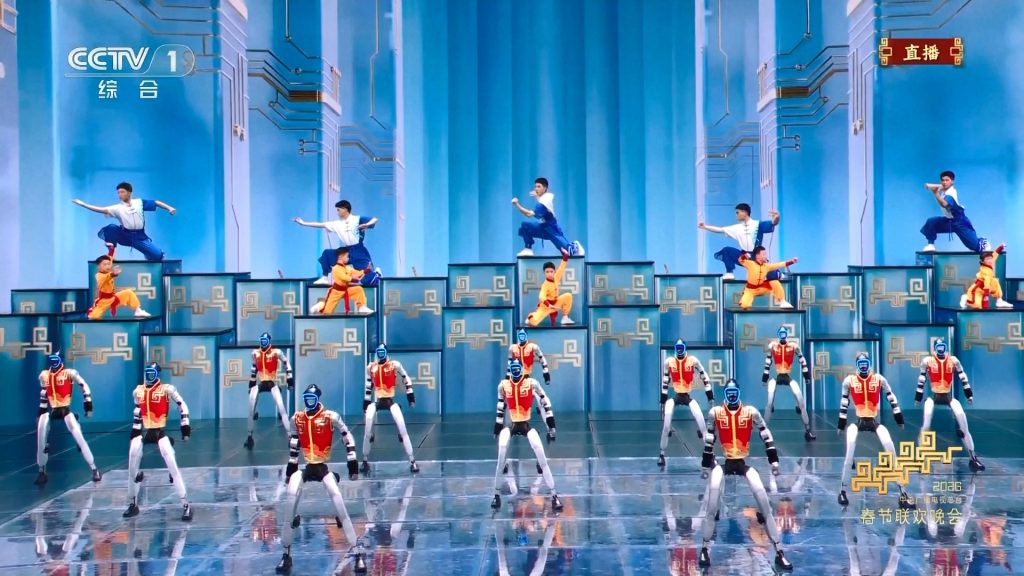
Four rising robotics companies—Unitree Robotics, Galbot, Noetix, and MagicLab—dominated the night with performances that blended entertainment, engineering, and unmistakable geopolitical messaging. Their humanoid robots appeared in martial arts demonstrations, comedy sketches, musical numbers, and synchronized dance routines, marking a dramatic leap from the more limited, prop‑like appearances of previous years.
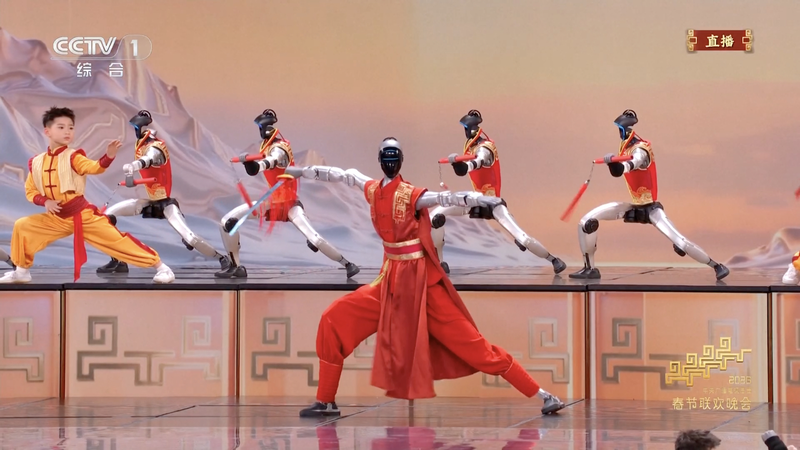
The gala’s opening sketches featured robots executing complex kung fu sequences, wielding swords and nunchucks alongside human child performers. One standout sequence imitated the unpredictable sway and backward falls of drunken boxing, showcasing advances in multi‑robot coordination, fault recovery, and precision balance.
Technical Feats That Pushed the Limits
Unitree’s machines delivered some of the most technically ambitious stunts of the night. Their robots performed:
- Parkour‑style table vaults
- Aerial flips exceeding three meters in height
- Single‑leg aerial rotations
- Rapid cluster repositioning at speeds up to 4 m/s
These feats, supported by advanced AI algorithms and 3D LiDAR, signaled a shift from “look what we can build” to “look what we can deploy at scale.”
MagicLab’s robots opened the show with a “Thomas 360” acrobatic move, then later joined pop stars in a musical number—an unmistakable attempt to normalize humanoids as part of mainstream entertainment. Galbot, meanwhile, demonstrated practical dexterity: cracking walnuts, picking up glass shards, folding clothes, and even skewering sausages with natural, human‑like motion.
Robots as Companions, Not Just Performers
Noetix’s “Bumi” humanoids appeared in a family‑themed comedy sketch, emphasizing the company’s push into household and educational robotics. With a price point under $1,400, the Bumi represents a new category of consumer‑accessible humanoids designed for companionship and daily assistance.
Industrial Policy in Prime Time
The gala’s robotics saturation wasn’t accidental. Beijing has made humanoid robotics a pillar of its industrial strategy, and the event served as a glossy, high‑impact advertisement for that agenda. Reuters and other outlets noted that the showcase aligned with China’s push to dominate the future of manufacturing and embodied AI.
The timing was strategic: companies like AgiBot and Unitree are preparing for IPOs, and domestic AI firms are releasing new frontier models during the lucrative Lunar New Year period. The gala offered them a global spotlight at the exact moment investor attention is peaking.

Global Reaction: Awe, Alarm, and Viral Clips
International media outlets—from Reuters to The Sun—framed the performances as evidence of China’s rapid technological ascent. Social media exploded with reactions, with viewers praising the robots’ fluidity, balance, and cultural integration. Some compared the progress to last year’s performances and called the leap “magical.”
Even Elon Musk weighed in, noting that Chinese robotics companies may become Tesla’s biggest competitors as he pivots toward embodied AI.
A Glimpse Into China’s Robotic Future
The 2026 Spring Festival Gala wasn’t just entertainment—it was a strategic demonstration of national capability. With China accounting for 90% of global humanoid robot shipments last year, the message was clear: the country intends not only to lead the robotics race but to define its cultural and industrial future.
As the world debates the implications of embodied AI, China is already staging its vision in front of hundreds of millions.
Unitree’s Ambitions: From Stage Spectacle to Mass Deployment
Unitree Robotics emerged from the 2026 Spring Festival Gala not just as a crowd‑pleaser but as the clearest signal of China’s industrial intentions in humanoid robotics. The Hangzhou‑based company used the national broadcast to preview what it sees as the next phase of its evolution: scaling from showmanship to mass production and real‑world deployment.
A Massive Production Ramp‑Up
Following its high‑profile gala performance, Unitree announced plans to ship up to 20,000 humanoid robots in 2026, a nearly fourfold jump from the roughly 5,500 units it delivered the previous year. CEO Wang Xingxing told Chinese outlet 36Kr that global humanoid shipments could reach “tens of thousands” this year — with Unitree alone accounting for half or more of that volume. eWeek
This surge reflects not only rising domestic demand but also Unitree’s intention to position itself as a global competitor to Western players like Tesla, Figure, and Agility Robotics. Market analysts noted that Unitree’s 2025 shipments already surpassed the combined output of several U.S. rivals.
IPO Momentum and Strategic Backing
Unitree’s expansion is unfolding alongside preparations for a major initial public offering, with a potential valuation of up to 50 billion yuan ($7 billion). The company has attracted heavyweight backers — including Geely, Alibaba, and Tencent — and has been profitable since 2020, with revenues exceeding 1 billion yuan. CNBC
Founder Wang Xingxing was also among the tech leaders invited to a rare meeting with President Xi Jinping, underscoring Beijing’s interest in elevating domestic champions in embodied AI.
From Controlled Stages to Unpredictable Environments
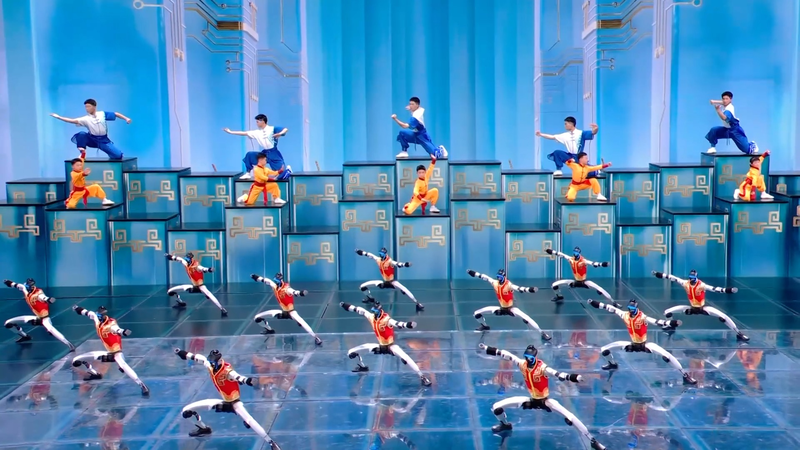
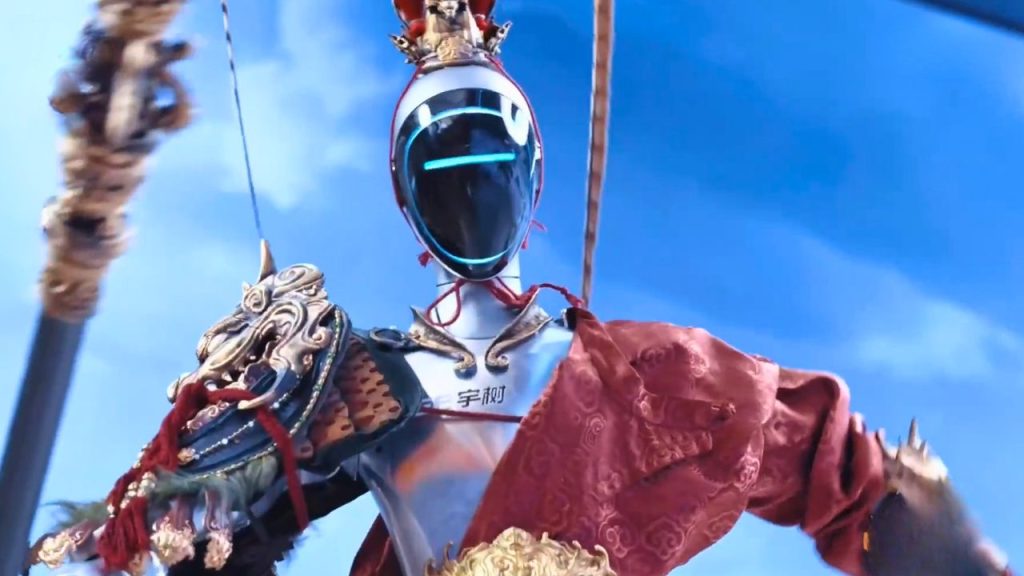
While Unitree’s gala performance showcased extraordinary technical polish — autonomous kung fu routines, 3‑meter trampoline flips, and 4 m/s sprints — the company acknowledges that real‑world deployment remains the next major hurdle.
To bridge that gap, Unitree is developing embodied AI “brain” systems designed to help robots navigate complex, unstructured environments without human intervention. These systems aim to move Unitree’s robots beyond the flat, predictable surfaces of a televised stage and into factories, logistics centers, and service environments.
Scaling Toward Group Deployment
Wang emphasized that the innovations demonstrated at the gala — from coordinated flips to autonomous martial‑arts sequences — were not just for spectacle. They were designed to prove that large‑scale group deployment is becoming feasible.
Unitree’s roadmap suggests a future where fleets of humanoids operate in sync, supported by standardized hardware, upgraded algorithms, and a maturing embodied‑AI stack.
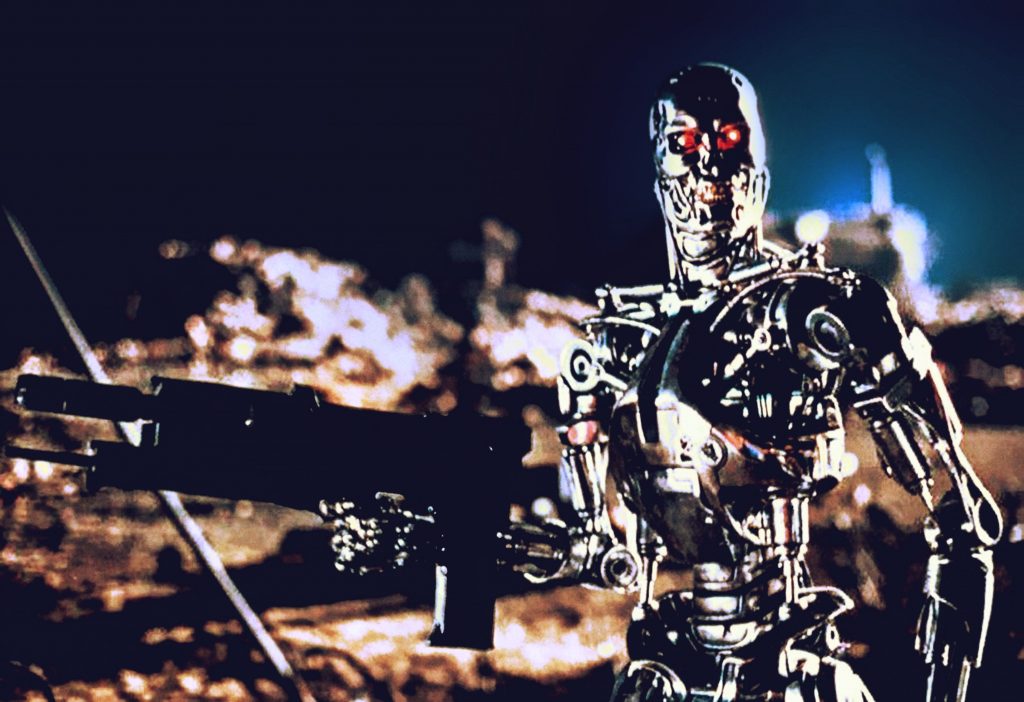
The Final Nuts: Which future are these robots really being built for?
For all the flips, nunchucks, and “drunken boxing” charm, there’s a darker through‑line we can’t just clap past: what kind of relationship with machines are we being trained to accept? The gala sells a future where humanoids are cute, talented, and patriotic—but the global track record of robotics and AI points somewhere far less cozy.
From crowd‑pleasers to crowd‑control
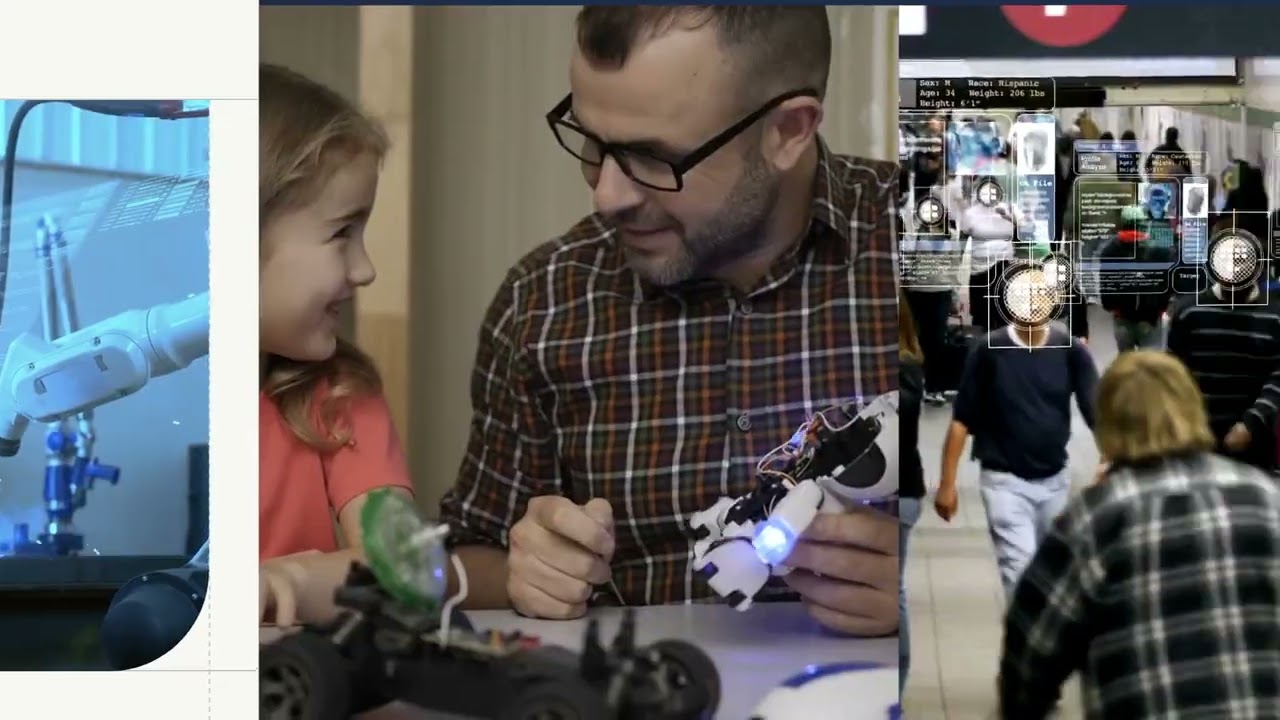
On stage, the robots are playful performers. Off stage, their cousins are already:
- Patrolling streets as robot police dogs
- Scanning crowds with computer vision
- Integrated into border security, checkpoints, and protest control
The same balance, agility, and fault‑recovery that make a robot land a perfect backflip also make it a perfect platform for non‑stop, non‑tiring enforcement. You don’t need a conspiracy board to see the trajectory: once a state can field cheap, durable, remotely updated humanoids, the cost of saying “send in the robots” drops close to zero.
We’re not just building machines that can dance—we’re normalizing machines that have superior strength, agility, speed than any human and that can obey without conscience.
War got the first real “product‑market fit”
If you look at where AI and robotics have been truly “successful” so far, it’s not in folding laundry—it’s in war and surveillance.
- In Gaza and Ukraine, drones and AI‑assisted targeting systems are already part of daily reality.
- Autonomous and semi‑autonomous systems are being tested for reconnaissance, strike coordination, and battlefield logistics.
- Every conflict becomes a live‑fire beta test for the next generation of “smart” weapons.
So when we watch a humanoid robot do kung fu on a glittering stage, we have to ask: why is the most aggressive, lethal use case always the first to be industrialized? Why do we see more demos of robots kicking doors than robots changing flat tires on the side of the highway?
Because war, policing, and control have clear buyers, clear budgets, and no requirement to prove “human benefit” beyond “mission accomplished.”
Where’s the “Happy Homemaker” edition?
If this technology is supposedly about “making life easier,” where are the prime‑time demos of:
- A robot doing a full load of dishes in a real, messy kitchen
- Mowing an uneven lawn with kids’ toys scattered around
- Changing a flat tire on a dark roadside in the rain
- Helping an elderly person safely move around their home, day after day
Those are hard problems, yes—but so is synchronized multi‑robot parkour. The difference is who benefits and who pays. A robot that can clear a building, suppress a crowd, or replace ten warehouse workers has a direct line to institutional budgets. A robot that just makes your Tuesday less exhausting? That competes with your already‑unpaid labor.
And that’s the other quiet truth: we’re racing to build robots that replace workers before we’ve built a system where people can survive without work.
Automation without a landing pad
The spectacle hides a brutal sequencing problem:
- Robots and AI are being designed to replace human labor—from factories to logistics to service work.
- There is no robust social safety net, no universal basic income, no guaranteed floor for the people being automated out.
- The same institutions pushing automation are often the ones resisting structural reforms that would let people live decently without a traditional job.
So when we see humanoids framed as “the future of productivity,” the missing slide is: what happens to everyone who gets displaced? If the answer is “they’ll retrain” or “new jobs will appear,” that’s not a plan—that’s a slogan.
We’re building the Terminator‑adjacent infrastructure—autonomous systems, weaponized platforms, robotic enforcement—without building the Star Trek social contract that would make advanced tech actually feel like progress.
The normalization campaign
That’s what makes the Spring Festival Gala so important: it’s not just a tech demo, it’s a cultural conditioning exercise.
- Robots are framed as cute, funny, patriotic, family‑friendly.
- Their presence is tied to national pride and technological destiny.
- The audience is invited to feel awe, not unease.
Once people are emotionally attached to the idea of humanoids as “part of the family,” it becomes easier to roll them out in less charming roles: in schools, in hospitals, in public squares, at borders. The same hardware, different software, different mission.
We’re being acclimated to the presence of machines with bodies—long before we’ve had a serious public debate about what powers they should have, who controls them, and what lines must never be crossed.
The questions we have to force onto the stage
So in this final nut, we don’t just marvel at the flips—we ask the questions the spectacle is designed to drown out:
- What hard red lines are we drawing on weaponized robotics and autonomous killing?
- Who decides where humanoids can be deployed—policing, prisons, protests, borders—and under what constraints?
- Why is there more investment in robots that can replace workers than in systems that let humans live with dignity beyond wage labor?
- Where is the binding commitment that these machines will first and foremost reduce human suffering, not optimize human control?
Because if we don’t ask those questions now, the answers will be written for us—by defense ministries, security agencies, and corporations that see robots not as companions, but as force multipliers and cost reducers.
Which path do we take?
The tech on that Chinese stage proves one thing: we are absolutely capable of building astonishing embodied machines. The fork in the road isn’t about capability anymore—it’s about intent.
- One path leads to robotic enforcers, automated warfare, and a workforce squeezed between algorithms and humanoids.
- The other path leads to machines that genuinely expand human freedom—taking on dangerous, exhausting, and demeaning work while we build systems that let people live without constant economic fear.
Right now, the momentum is tilted toward the Terminator direction, not the Happy Homemaker edition.
The question for readers isn’t “Are the robots impressive?”—they clearly are. The real question is: who are they being built to serve, and will we demand a say before the choreography moves from the stage to our streets?
Any questions or concerns, please comment below or Contact Us here.

Source List
- Reuters via NBC News – China’s humanoid robots take center stage for Lunar New Year showtime
https://www.nbcnews.com/news/world/china-humanoid-robots-spring-festival-gala-reuters - Zee News – Humanoid robots perform live Kung Fu at China’s Spring Festival Gala
https://zeenews.india.com/world/humanoid-robots-perform-live-kung-fu-at-chinas-spring-festival-gala-2026-2712341.html - CGTN / EZ Newswire – Chinese Humanoid Robots Gallop Towards Consumer Market
https://www.einnews.com/pr_news/712345678/cgtn-chinese-humanoid-robots-gallop-towards-consumer-market - Interesting Engineering – Unitree to ship 20,000 humanoid robots in 2026
https://interestingengineering.com/innovation/unitree-humanoid-robots-spring-festival-gala-2026 - El País English – China’s robot warriors: A show of technological prowess
https://english.elpais.com/international/2026-02-18/chinas-robot-warriors-a-show-of-technological-prowess.html - Xinhua – Spring Festival gala highlights China’s tech ambitions via robotics showcase
https://english.news.cn/20260217/robotics-spring-festival-gala-tech-ambitions - CBC News – China showcases humanoid robots at Spring Festival gala
https://www.cbc.ca/news/world/china-humanoid-robots-spring-festival-gala-2026 - CNBC – China’s humanoid robots go from viral stumbles to kung fu flips in one-year
https://www.cnbc.com/2026/02/20/chinas-humanoid-robots-go-from-viral-stumbles-to-kung-fu-flips.html
- Deeznuts.tech Developer Progress Update 8-17-2026
- The Truth Behind the U.S. Government’s Sudden Shift on Anthropic
- Google Gives in to Uncle Sam’s Demands
- China Breaks the Brain Barrier with Neuracle BCI Technology
- ⚖️ The Supreme Court Just Blinked — And Left AI Copyright Law in a Legal No‑Man’s‑Land

Leave a Reply