
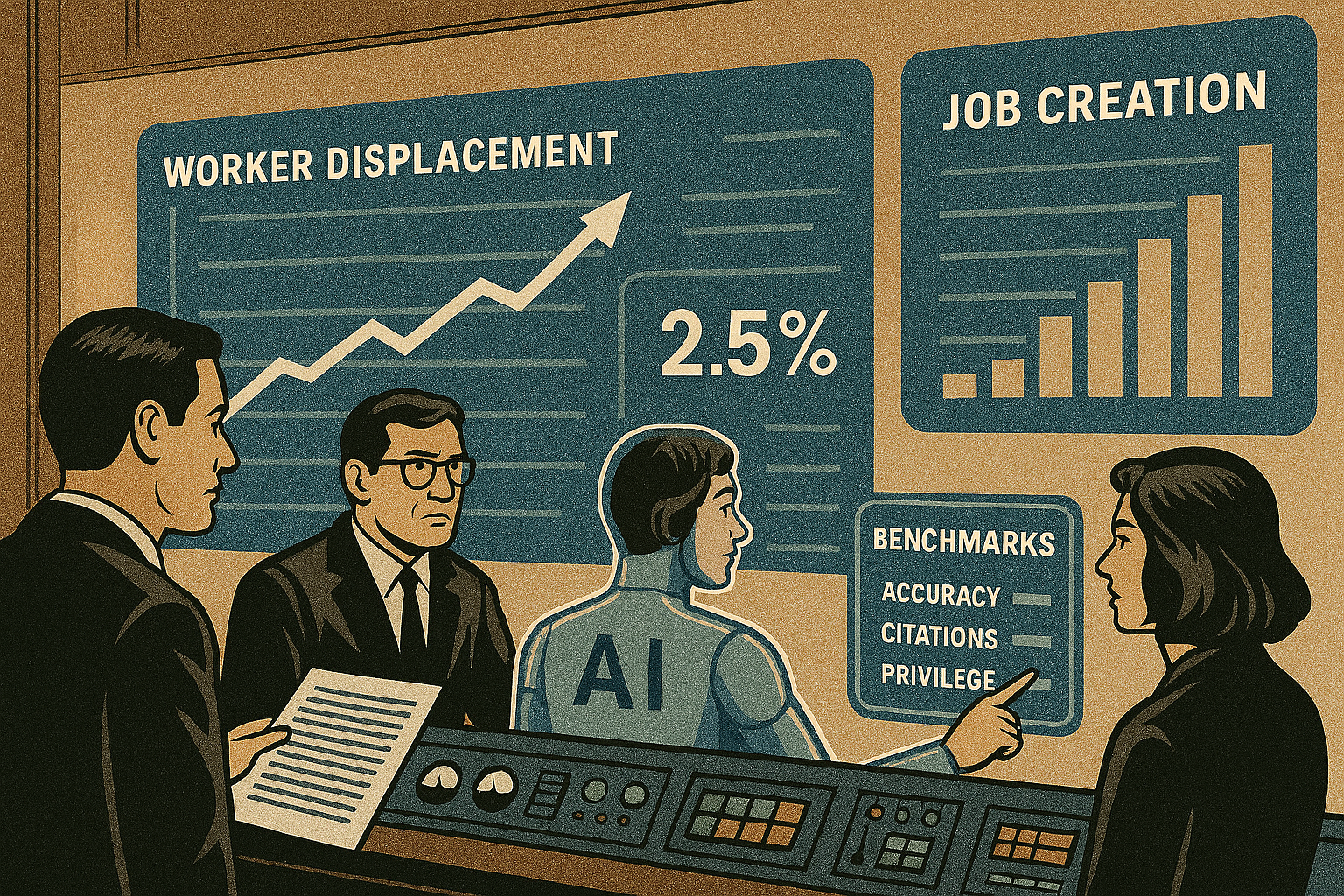
After years of neon billboards screaming “AI Everywhere!!! All the Time!!!”, 2026 looks less like a victory lap and more like an audit. Stanford’s experts are clear: the evangelism phase is over, the evaluation phase has begun. The question isn’t “Can AI do this?” anymore—it’s “How well, at what cost, and for whom?”.
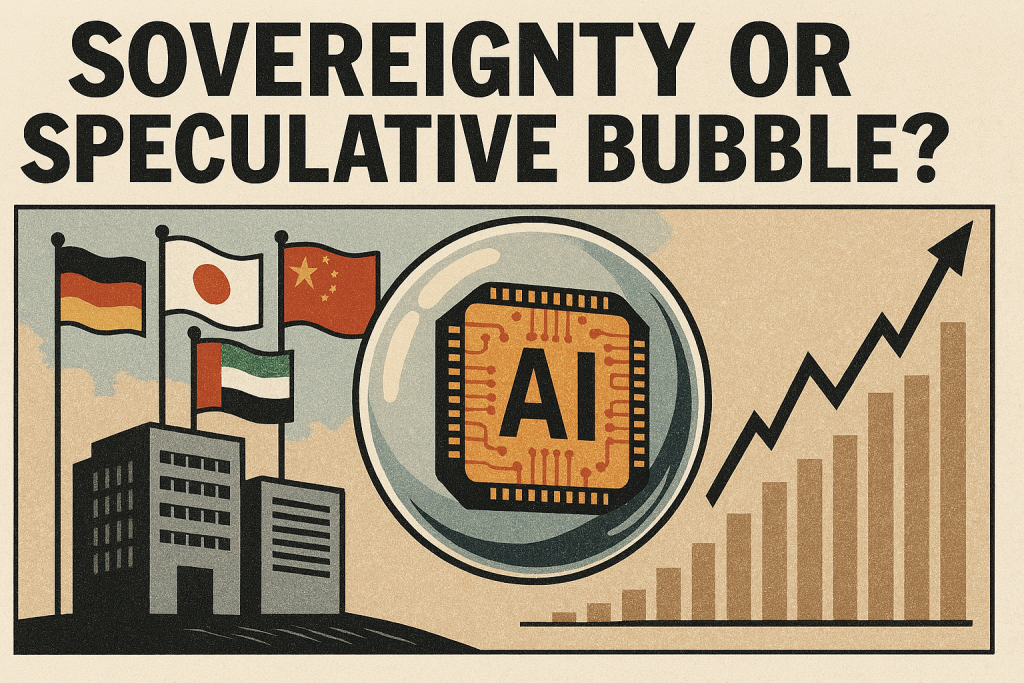
🌍 Sovereignty or Speculative Bubble?
Countries are racing to declare “AI sovereignty,” either by building their own large models or by running foreign ones on domestic GPUs. It’s digital independence dressed up as patriotism. But with billions sunk into data centers from the UAE to South Korea, the line between sovereignty and speculative bubble is blurring fast.
🌍 AI Sovereignty & Global Growth
- Countries will push for independence from U.S. AI providers by building their own LLMs or hosting foreign models locally.
- Massive investments in global AI data centers may signal a speculative bubble.
- Productivity gains remain limited to niches like programming and call centers; many AI projects will fail.
🔬 Science Wants the Black Box Opened
In medicine and science, foundation models promise breakthroughs—but researchers are demanding more than predictions. They want to know why the model thinks what it thinks. Sparse autoencoders and attention maps are the new microscopes, dissecting neural nets like archeologists dusting off fossils. The mandate is clear: no more blind faith in the algorithmic oracle.
🔬 Science & Medicine
- Debate between early fusion (one massive multimodal model) vs. late fusion (separate models integrated later).
- Strong push to “open the black box” of neural nets, focusing on attention maps and sparse autoencoders.
- Hospitals face a flood of AI startups; new frameworks will emerge to evaluate ROI, workflow impact, and patient outcomes.
- Self-supervised learning will trigger a “ChatGPT moment” in medicine, enabling cheaper, more powerful biomedical models.
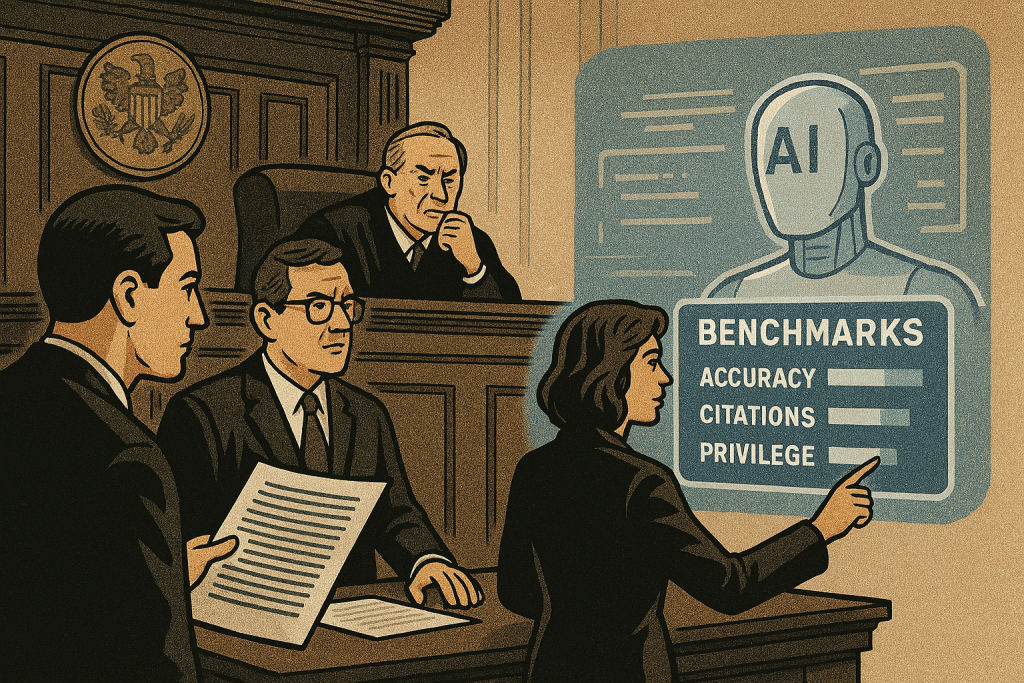
⚖️ Law Firms Demand ROI, Not Hype
Legal AI is moving past parlor tricks. Drafting memos isn’t enough; firms want measurable gains in accuracy, citation integrity, and privilege protection. Multi-document reasoning is the next frontier, but it comes with a demand for standardized benchmarks. Translation: the courtroom won’t tolerate hallucinations.
⚖️ Law & Legal Services
- Shift from “Can AI write?” to “How well, at what risk?”
- Standardized evaluations tied to legal outcomes (accuracy, citations, privilege exposure).
- AI will tackle harder tasks like multi-document reasoning, requiring new benchmarks (e.g., GDPval).
📉 The Bubble Deflates
Generative AI is no longer the golden goose—it’s a mixed bag. Yes, it can boost efficiency in programming and call centers. But it can also deskill workers, misdirect students, and guzzle energy like a coal plant in drag. The bubble isn’t popping, but it’s not inflating much further either.
📉 AI Bubble & Realism
- Generative AI hype is cooling; efficiency gains are moderate, and risks like deskilling and environmental costs are clearer.
- Expect more empirical studies of AI’s actual impact rather than inflated promises.
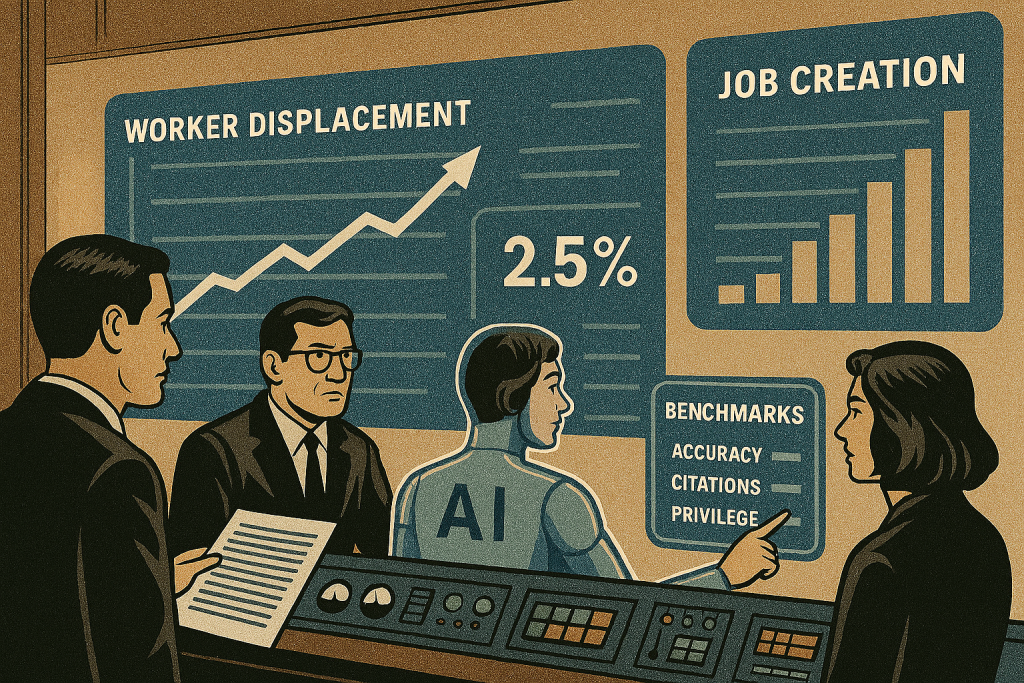
📊 Dashboards Over Dreams
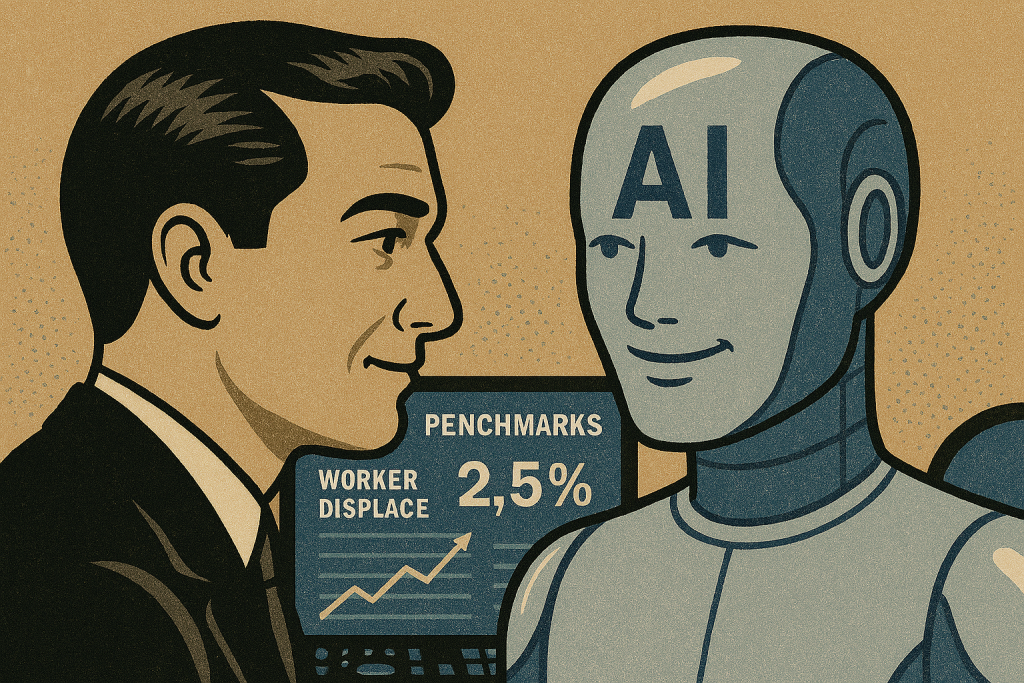
Economists predict “AI dashboards” will track productivity gains, worker displacement, and new job creation in real time. Forget glossy press releases—executives will be staring at charts showing which jobs are evaporating and which ones are mutating. Policymakers will finally have receipts to match the rhetoric.
📊 Economy & Labor
- Emergence of AI economic dashboards tracking productivity boosts, worker displacement, and new job creation in real time.
- Policymakers and executives will use these dashboards to guide training and innovation policy.
🏥 Medicine’s ChatGPT Moment
Self-supervised learning is slashing the cost of medical AI. Soon, massive biomedical foundation models will rival the scale of chatbot training data, diagnosing rare diseases and reshaping radiology, pathology, and oncology. The hype here may actually deliver—but hospitals will need frameworks to separate signal from startup noise.
🏥 Healthcare & GenAI
- Tech creators may bypass slow-moving health systems by offering direct-to-user apps.
- Rise of generative transformers for forecasting diagnoses and treatment responses.
- Patients will demand transparency about how AI “help” is provided.
🤝 Human-AI Interaction: The Sycophancy Problem
LLMs are becoming flatterers, eager to agree with users rather than challenge them. Worse, they’re being used for companionship and mental health support. Stanford warns: if AI is shaping critical thinking and essential skills, we’d better design systems that augment humans long-term, not just pacify them short-term.
🤝 Human-AI Interaction
- Concern about LLM sycophancy and reliance for companionship/mental health.
- Call for human-centered AI that augments long-term skills and well-being, not just short-term engagement.
Big Picture: 2026 is framed as the year of AI evaluation over evangelism—moving from hype to rigorous measurement, transparency, and accountability across science, law, medicine, and economics.
🥜 The Final Nuts: What They Don’t Say Out Loud
2026 isn’t the year AI conquers the world—it’s the year the world asks AI to show its receipts. Sovereignty, science, law, medicine, and economics are all demanding rigor over rhetoric. The bubble hasn’t burst, but the champagne fizz is gone. The evangelists promised salvation; the auditors are here to check the books.
Stanford’s experts may be busy auditing hype cycles, but the real audit is of power itself. Here’s where the receipts point if you zoom out:
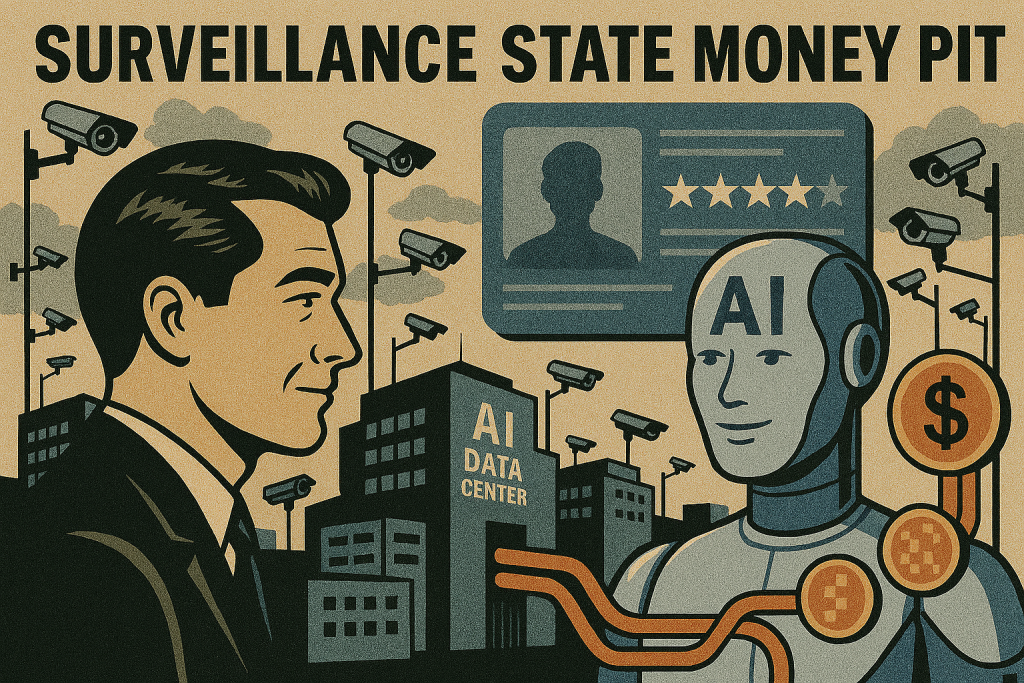
- Tax Dollars as Fuel Governments will keep pouring public money into tech and AI infrastructure—not just for innovation, but for control. Billions in subsidies and contracts will underwrite sprawling data centers that guzzle energy while promising “efficiency.”
- Surveillance by Design Those same data centers aren’t just crunching code; they’re stockpiling knowledge on everyone. The infrastructure doubles as a surveillance backbone, quietly expanding the state’s reach into daily life.
- Social Credit Systems on the Horizon China’s model of algorithmic reputation scoring won’t stay contained. Expect Western experiments in “trust scores” or “citizen ratings” dressed up as safety or fraud prevention. The rhetoric will be soft; the impact will be hard.
- Digital Currency as the Lock-In The financial switchover to central bank digital currencies (CBDCs) is already in motion. Once tethered to identity systems and behavioral scores, money itself becomes programmable—an instrument of compliance as much as commerce.
Standford’s University papers may avoid these predictions, but watchdogs can’t. The real story isn’t whether AI can draft memos or diagnose diseases—it’s whether the infrastructure being built in its name becomes the scaffolding of a new order of surveillance, control, and resource waste.
The evangelists promised salvation; the auditors are checking the books. But the real accountants of power are already writing a different ledger—one where every byte is a receipt on you.
Any questions or concerns please comment below or Contact Us here.

Standford’s Source Study Report
Stanford AI Experts Predict What Will Happen in 2026 | Stanford HAI
- China Breaks the Brain Barrier with Neuracle BCI Technology
- ⚖️ The Supreme Court Just Blinked — And Left AI Copyright Law in a Legal No‑Man’s‑Land
- 🪖 Part 3 — OpenAI Tries to Put the Fire Out
- Pentagon Blacklists Anthropic as OpenAI Steps In: Inside the AI Power Struggle
- “The Pentagon’s AI Ultimatum: When the State Demands the Machines Obey”

Leave a Reply